

75th Anniversary: Hobby Horse and Rocking Horse
DVSI Managing Director Ulrich Brobeil in Conversation
By Sibylle Dorndorf
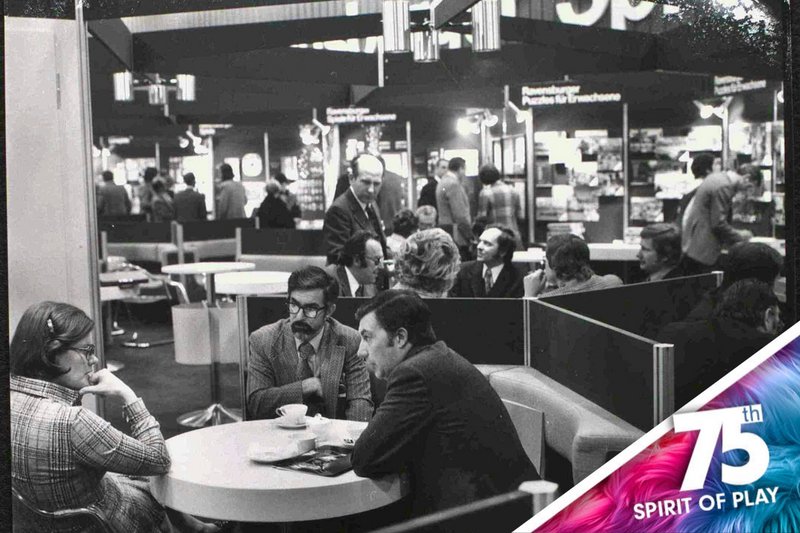
The flagships of the toy industry are Spielwarenmesse eG and the German Toy Industry Association (DVSI). These long-standing companions not only share a toy horse as a heraldic animal in their respective logos. As early as the post-war years, the fair and the association operated side by side and, with Spielwarenmesse, created a synergistic structure that enabled the successful development of the toy industry.
A Look into the Archives
The origins of the two key players in the toy industry were summarised by Dr Helmut Schwarz after his retirement as Director of the Toy Museum and Head of the German Games Archive Nuremberg, and he recorded them for Spielwarenmesse eG.
In spring 1949, entrepreneurs from the Nuremberg-Fürth region came up with the idea of establishing their own trade fair in Germany’s toy city, Nuremberg. Arno Drottbohm, a member of the VEDES board, pledged the support of the German specialist trade.
At that time, the association landscape of the German toy industry was organised on a federal basis. The Working Group of the Toy Industry therefore took on the task of implementing the idea. It formed trade fair committees, which included representatives from all regional specialist associations as well as from wholesale and retail. In the post-war years, and against the backdrop of the emerging division of Germany, the associations of Bavaria and Baden-Württemberg played a particularly important role.
Under the leadership of Hans Mangold, managing director of the toy company Gama, who personally guaranteed the fair, the organisation team led by trade fair manager Fritz Drescher and Ernst Theodor Horn, Chief Executive of the AG Toy Industry, managed to set up the first German toy trade fair within just a few months. Through their cooperation in the bizonal Working Group of the Toy Industry, they – together with VEDES – made a decisive contribution to the realisation of the first German Spielwarenmesse.
In 1974, the Association of the German Toy Industry, based in Nuremberg, was founded as a national umbrella organisation, from which, in 1991, the Deutscher Verband der Spielwarenindustrie e.V. (DVSI) emerged.
Written by Dr Helmut Schwarz, July 2017
Interview with Ulrich Brobeil
Mr Brobeil, you joined the German Toy Industry Association (DVSI) in 2005 as a young lawyer and have been Managing Director of the DVSI for more than ten years. Do you still remember your first visit to Spielwarenmesse?
Ulrich Brobeil: I remember it well. My children would say I felt ‘lost’. I had only started at DVSI a few months earlier. 2006 was my very first Spielwarenmesse. I didn’t know anyone and nobody knew me. I thought: Phew, this is going to be a challenge. I sensed that a big family was gathering here. It felt as if everyone knew everyone else. All encounters took place on a very personal level and were marked by genuine mutual interest. That was new to me. During a tour of the halls with Dr Volker Schmid, I started to relax a little and thought to myself: What a cool industry!
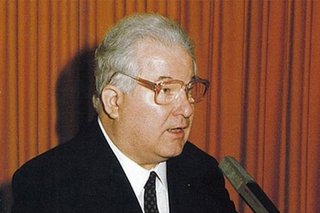
Dr Benno Korbmacher – Chief Executive of the Association of the German Toy Industry from 1972 to 1991 – took over the position of Managing Director of Spielwarenmesse eG on 1 April 1974. Unimaginable today. But there are certainly areas that trade fair directors and association heads still work on together…
Ulrich Brobeil: There are many such areas. To answer your question: I have heard about this dual role. Today, such a constellation is hard to imagine. Our complex fields of responsibility are simply too different. In the USA, there is still such a mixed model. There, the association, The Toy Association, is also the organiser of the fair, toyFAIR! New York and, since 2024, also Chicago Toys & Games. DVSI and Spielwarenmesse have always worked closely together when it comes to trade fair presences abroad. It is in our shared interest to open up access to new markets for companies—for example, with joint stands. Spielwarenmesse has established a very successful model for this: the World of Toys programme. It’s an all-inclusive package: the entire trade fair process is handled for the companies.
Where do you see common ground between the Toy Association and Spielwarenmesse?
Ulrich Brobeil: I would like to pick up where I left off in my previous answer. On the international stage, we operate shoulder to shoulder. I am thinking of events organised by our global toy association, ICTI, the International Council of Toy Industries. At these, DVSI and Spielwarenmesse have presented themselves side by side. In 2009, we jointly organised and financed an ICTI meeting in Munich.

The trademark of Spielwarenmesse is a rocking horse, while DVSI features a hobby horse in its logo. What do these two symbols represent for each institution?
Ulrich Brobeil: I find it remarkable that we share the same heraldic animal, even if in different forms. It shows that we see ourselves as part of a playful industry. Incidentally, the original DVSI logo is based on a square coin, known as a “Klippe”. The founder and long-standing president of the DVSI, Georg Meidenbauer, had the logo designed at the time. Georg Meidenbauer had a keen interest in art history. Around the time of the Thirty Years’ War, the hobby horse was one of the most sought-after toys. It enabled children to have joyful experiences even in difficult times. That remains our mission to this day.
The DVSI members are virtually a who’s who of the toy industry, even though the companies vary greatly in size. The same situation can be found at Spielwarenmesse eG. In your opinion, how can the needs of the big players, small and medium-sized enterprises (SMEs), listed companies and family-run businesses all be met?
Ulrich Brobeil: This diversity may seem challenging, but it isn’t. On the contrary, it’s the very spirit of the toy industry. If there were only big players, it would be rather dull. I enjoy my job precisely because I never know what will happen next. The demands placed on DVSI by small, medium-sized and large companies are so complex and so varied. That constantly challenges us and sharpens our profile every day. And think of Spielwarenmesse: how boring would it be if only the global players gathered there? And how fascinating is the diversity that this industry offers when it comes together in Nuremberg.

DVSI has also been an exhibitor at Spielwarenmesse for many years. From your perspective, what is the significance of this presence at the fair?
Ulrich Brobeil: The presence at the fair is extremely important for DVSI. Before my time, the association had an office somewhere on the exhibition grounds. Since 2013, we have been showing our colours with our own stand in the foyer of Hall 12.0 CCN West. The DVSI stand serves, on the one hand, as a meeting point for bilateral discussions with politicians, senior officials and experts from various fields such as market surveillance, toy safety and the design industry. On the other hand, it is a point of contact for our members. After the fair closes, we always host a relaxed get-together. People reflect on the day and discuss one issue or another. It is very important to me that we are present for our member companies at Spielwarenmesse. We are there—accessible, approachable. Not for representational purposes, but because we want to be easily reached if there are any problems or, for example, legal questions arise. Of course, we also want to appeal to potential new members. And, as mentioned at the outset, we invite politicians to visit us at Spielwarenmesse and to join us for a tour. Alexander Dobrindt has already been, as have Ilse Aigner, Katarina Barley and many others. Incidentally, this is also a point where Spielwarenmesse and DVSI work hand in hand. If a contact is made at the political level and a visit to the fair is being considered, we keep each other informed. It is in both our interests to be recognised with our concerns on the political stage.
You just mentioned legal issues. Is that mainly about trademark and product piracy?
Ulrich Brobeil: Unfortunately, that is the case. Copies of branded products keep appearing at the fair. Idea theft is also not uncommon. But, thanks to Spielwarenmesse, there is a rapid response team, of which I am also a part. Spielwarenmesse eG itself, due to the legal situation, is not authorised or entitled to take independent action against infringements of intellectual property rights. That’s why the IPR Council was established. We intervene when ideas and developments are imitated by counterfeiters. But it’s also about other legal infringements, about industrial property rights, and so on. I find this extremely interesting, as I am on site together with a retired judge who served at the Federal Court of Justice. That shows you how much importance we attach to this issue.
You were present at the Toy Business Forum in 2025, so you are also a welcome guest on the big stage of Spielwarenmesse…
Ulrich Brobeil: Even though my messages are not always easy to digest. The geopolitical framework conditions ensure, with remarkable regularity, that there is always something to report. And where better than at Spielwarenmesse to bring current topics to the attention of companies? In 2025, I discussed with Wolfgang Bücherl, Head of the Regional Representation of the European Commission in Munich, at the Toy Business Forum whether Europe needs new guidelines to get back on track economically. The Draghi Report, after all, gave European competitiveness a very poor rating in October 2024. We had a full house, but I also remember that, faced with the huge stage, both of us had to take a deep breath at first. I had previously known the Toy Business Forum as a rather sober event. I knew nothing about the relaunch, which, by the way, was absolutely successful. Being on stage there—that really is something.

Do you remember any other highlights at Spielwarenmesse?
Ulrich Brobeil: Yes, that was also in 2025. It was a joint event organised by DVSI, the German Cultural Council and Spielwarenmesse. At that time, we presented the latest issue of the newspaper Politik & Kultur published by the German Cultural Council, which focused on toys as its main topic. One of DVSI’s declared aims is for the toy industry to be recognised as the 12th sub-sector of the cultural and creative industries. Once again, it was Spielwarenmesse that enabled us to present this ambition to a wide audience.
When it comes to the Value of Play, Spielwarenmesse and DVSI also work hand in hand…
Ulrich Brobeil: Yes, in 2026 we also have great support from Spielwarenmesse for our Value of Play project. The Toy Business Forum programme will kick off before the fair begins, on 28 January from 8:30 am, with a new format—the international Value of Play Conference, which examines the value of play from various perspectives. On 29 January, I will also be moderating an event at the Toy Business Forum focusing on the new Toy Regulation. This is of the utmost relevance for our companies. TIE, Toy Industries of Europe, will also be involved.
The past few years have brought many changes for both Spielwarenmesse and DVSI. What have been the most significant turning points for DVSI?
Ulrich Brobeil: The most negative experiences came right at the beginning of my time. In 2007, there were numerous toy recalls—negative headlines without end. We all learned a lot back then, each in our own way. This was followed, by the way, by the revision of the Toy Directive from 2009 to 2011, which has been revised again over the last two and a half years—resulting in the new EU Toy Regulation. Then came the Lehman crash in 2009. The insolvency of the US investment bank Lehman Brothers triggered a global financial crisis. Panic on the stock markets—and in our globally operating companies. And then came coronavirus. I spent day and night thinking about how I could bridge this period of contact restrictions and stay in dialogue with our members. During the pandemic, the DVSI Coffee Break was born—a format that was incredibly well received. Forty-five minutes of open discussion on industry topics, everyone in front of their screen with a cup of coffee in hand. Then came our newsletter, which kept and still keeps all our members informed. We were so pleased to be able to meet at least virtually. Many things emerged during the pandemic that have helped us move forward.
Is there an incident at Spielwarenmesse that you remember fondly?
Ulrich Brobeil: Absolutely. There is one event I will never forget. My wife and I were expecting our first child—pure excitement. The due date was, of all times, during Spielwarenmesse. I was torn. But there was no way around it: Spielwarenmesse is a must-attend event. At some point, the fair management found out about my dilemma—and didn’t hesitate for a moment: I was given a VIP special parking permit, which meant my car was parked right in front of the entrance to Hall 12. I could have jumped in and set off straight away. With a bit of luck, I might have made it to the clinic in Augsburg in time. I say might, because Leopold decided not to cause his father unnecessary stress. He was born shortly after Spielwarenmesse.
Your closing words: What are your wishes for Spielwarenmesse on the occasion of its 75th event?
Ulrich Brobeil: My wish for Spielwarenmesse is that it continues to radiate its unique Spirit of Play and allows all of us in the industry to be part of it.
The German Toy Industry Association (DVSI) will be present at Spielwarenmesse 2026 at the Exhibition Centre Nuremberg.
Visitors to the DVSI stand will receive comprehensive information about the association’s work and current industry topics.
DVSI stands for dialogue, networking and the promotion of the toy industry.
You can find further participating companies here.
About the author
Sibylle Dorndorf has been writing about the toy industry for almost 30 years, most recently as editor-in-chief of the TOYS magazine family at Göller Verlag, Baden-Baden. Her passion: companies that reinvent themselves, brands that position themselves credibly, people who have something to say and products with a future.