

Start-ups part 4: The vision of a better world
Agnawool – Social responsibility over profit maximisation
By Sibylle Dorndorf
More and more founders are consciously choosing to break away from the constant pressure for growth and are forging their own paths. They believe that economic success and social commitment can go hand in hand. These so-called zebras distinguish themselves from the profit-driven unicorns by their vision of contributing to a better world. Zebras often face greater challenges in securing capital or funding. Yet, with perseverance and determination, they succeed in bringing social and ecological issues to the forefront of the start-up scene. Agnawool is a prime example of this.
A drop in at Agna Wool Art
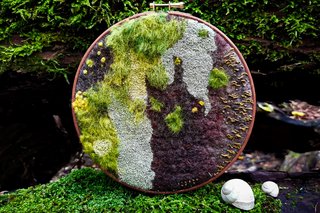
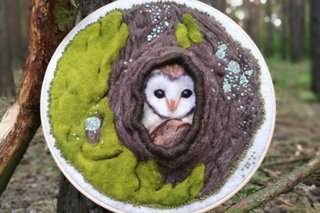
At the heart of the Polish start-up Agnawool, which specializes in needle felting kits, is Agna Kurnatowska. With over ten years’ experience in felting, her passion for wool is evident in every kit. Agna selects methods, materials and techniques that have proven successful in her own work. This enables both beginners and experienced hobbyists to create charming animal figures with ease and enjoyment. The DIY kits contain everything needed for felting the animals. As a founder with a zebra mindset, Agna places great emphasis on sustainable and environmentally conscious production.
Interview with Agna and Pawel Kurnatowski
Agna, when did you establish your company?
Agna Kurnatowska: The Agnawool project grew out of my hobby, which, with the support of my husband Pawel, I was eventually able to turn into a profession.
When did your hobby become your profession?
Agna Kurnatowska: Our breakthrough came when we won the “Toy of the Year” competition, the most prestigious award in Poland.
Pawel, what prompted you to found the company?

Pawel Kurnatowski: The impetus came from my wife, who learned needle felting over 15 years ago. She bought materials, but they turned out to be unsuitable – the wool was meant for wet felting and the needles were cheap imitations that didn’t work. But Agna was undeterred, mastered the technique and created beautiful objects. After a few years, she had the idea that we could put together kits to help even beginners learn felting and achieve great results. That’s how our DIY kits were born.
Did you receive any support or funding?
Pawel Kurnatowski: No, we did everything ourselves. First in our flat, then in the garage, until we could afford an office and warehouse. We grew organically and didn’t want investors, as we wanted to determine our own direction and pace of growth.
How do you divide your work?
Pawel Kurnatowski: The designs are all by Agna. She creates and assembles each kit. I handle marketing, production and sales. We complement each other perfectly.
Agna, do you consider the industry your product was developed for to be innovative?
Agna Kurnatowska: In a sense, yes. We’re seeing a trend towards rediscovering genuine creativity. We’re moving away from toys or kits that require strict adherence to instructions and force us to copy something exactly in order to succeed.
Do your kits include instructions?
Agna Kurnatowska: Our kits do include instructions for guidance, but we encourage customers to personalize their creations. For example, customers often buy a bear kit to make a capybara, or a fox to make a squirrel. I’ve seen wild boar with mohawks, guinea pigs turned into mice with tails, and even a bison with a hat.
Pawel, why did you choose this particular product category?
Pawel Kurnatowski: Both my wife and I love creative things and enjoy surrounding ourselves with them. We want to give everyone the opportunity to try something creative.
How and where do you sell your kits?
Pawel Kurnatowski: We have several major retail customers in the USA, Canada and Scandinavia. These are shops that value quality, design and ecology. We want to continue growing organically and are looking for partners worldwide for long-term cooperation. We are open to new markets and can currently offer our kits in over 12 languages.
How sustainable are your products?
Pawel Kurnatowski: Our wool is 100% natural – genuine Polish sheep’s wool, dyed using ecological methods. Our packaging is also made from recycled paper.
What challenges have you had to overcome?
Pawel Kurnatowski: Many, starting with finances. Expanding into new markets and developing new kits is expensive. We have many ideas for expanding our portfolio with new products.
Another challenge was the complexity of legislation, which we overcame by outsourcing tasks such as logistics.
Would you start a business again today?
Pawel Kurnatowski: Absolutely. For us, freedom and the chance to do creative work are more important than security, predictability, or a permanent job in a large company.
What would you do differently?
Pawel Kurnatowski: We’d give ourselves more time. It takes a while for the market to accept a new product. I remember at the Spielwarenmesse in Nuremberg, during our second year, a customer approached us and said, “Ah, you’re back. Good. Now we can talk about working together.”
The toy market is vast, and innovative products struggle to compete with big players or established companies. We newcomers need patience and perseverance.
What advice would you give to other founders?
Pawel Kurnatowski: Do what matters to you and what you enjoy – and be patient.
- Start-ups are a driving force in the global economy.
- There are over 150 million start-ups worldwide.
- The USA leads with 82,038 start-ups, followed by India with 17,438.
- Despite this growth, only about ten per cent of start-ups are successful in the long term.
- On average, 137,000 start-ups are founded every day, but most fail before reaching a solid establishment phase.
- 34 per cent of start-ups said their failure was due to a lack of demand for their products.
- Less than one per cent of start-ups reach a valuation of one billion US dollars.
Start-up Articles Overview
Startups Part 1: In the beginning was the idea
About innovative strength, success and the risk of failure
Start-ups Part 2: Starting a business in the toy industry
Smartek Toys – From company foundation to universal genius
Start-ups Part 3: Welcome, zebras and unicorns
The creature kingdom and start-up potential at a time of omnicrisis
Start-ups Part 5: Even global players start small
The success story of tonies and what founders can learn from it
Start-ups Part 6: Are they top dogs or rebels on the shelves?
Start-ups offer retailers innovative products and fresh ideas
Start-ups Part 7: The pulse of the future
How start-ups are driving change in the toy industry
The StartupArea at the Spielwarenmesse enables young companies to network with new business contacts. Start-ups can use this special area in Hall 3A to present their product ideas to the toy industry.
StartupArea package for international companies
Prerequisite: Founded no more than five years ago.
Offer includes 6 m² of booth space with equipment.
Young Innovators funding programme for German companies
Support from the Ministry of Economic Affairs.
Offer includes up to 15 m² of stand space.
About the author
Sibylle Dorndorf has been covering the toy industry for almost 30 years. The journalist last worked as the editor-in-chief at the TOYS family of magazines of the Göller Verlag publishing house from Baden-Baden, Germany. Her passion: Companies that reinvent themselves; brands that credibly position themselves; people who have something to say; and products with a future.