

What makes Nuremberg stand out in the world
A conversation with tourism manager Yvonne Coulin
By Peter Budig
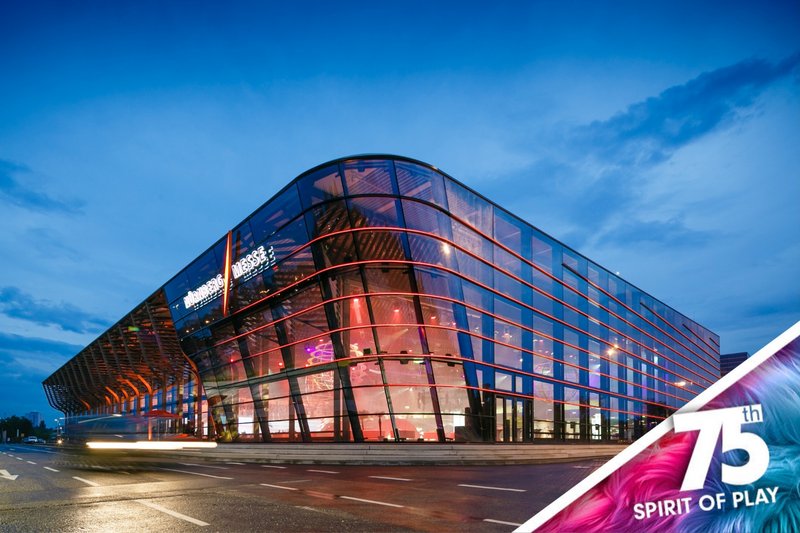
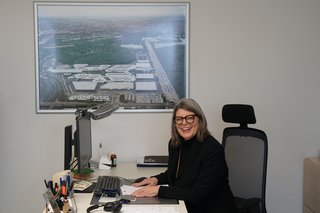
When Yvonne Coulin sits at her desk, the Nuremberg Exhibition Centre looks down on her with a smile. It is no coincidence that a photograph of the fair hangs above her workplace. The managing director of the Congress- und TourismusZentrale Nürnberg (CTZ) has a clear stance on the fair and on Nuremberg: “Tourism in Nuremberg restarted after the war with the Spielwarenmesse. The whole hotel industry grew out of those beginnings,” explains the Heidelberg native.
How does Nuremberg inspire a desire to travel?
For Yvonne Coulin, one professional question takes precedence: why should private individuals come to Nuremberg? In the interview she lays out the challenges again: “How does the city remain attractive to visitors? Which attractions spark curiosity and draw people in generally? How can new target groups be reached?” So what can Nuremberg offer?
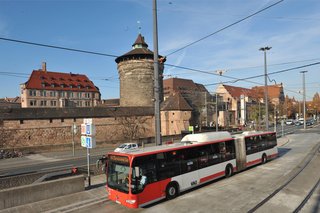
Yvonne Coulin has plenty of ideas about this, things so familiar to locals that residents hardly notice them: “Walk from the main station into the city and observe how tidy, manageable and clear the city centre is. After just a few steps you can see the Castle in the distance. It’s easy to find your way around; you can see shops and attractive places to eat. Immediately on the left are attractions such as the Neues Museum.” Of course Coulin knows that modern art does not necessarily attract huge crowds. But this is about something else: “You need beacons, and above all you need the new and the surprising. The new opera at the Reichsparteitagsgelände, set within a historic monument: that will pique the interest of music‑theatre fans. New people will come to us as a result,” she predicts. “Curiosity is a decisive driving force to lure people through your door.”
The Spielwarenmesse gave the starting signal for a development.
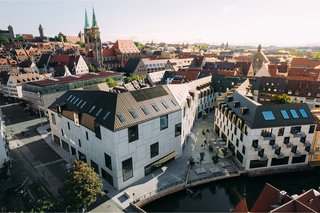
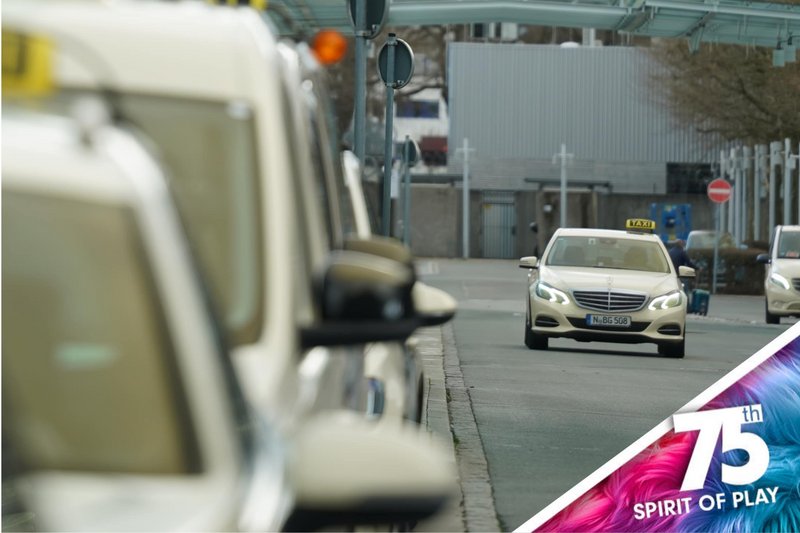
Seventy per cent of overnight stays in Nuremberg are accounted for by business travellers. Nuremberg now has more than 140 hotels and over 20,000 beds. In the first quarter of every year one trade fair follows another. Trade fairs make hoteliers cheer — Nuremberg is fully booked. Private guests only arrive in the summer. “The trade fair year begins with the Spielwarenmesse. It was the catalyst in the 1950s for hotels to be built on a large scale again. When I started here, we still arranged private rooms for guests during fair periods.” Tradition also plays an important role: “The Spielwarenmesse suits Nuremberg. It is not only a friendly product that everyone can relate to, but one with tradition and roots that reach far back into the city’s history.” The toy industry and manufactories have always been at home in Nuremberg. As a modern advantage, there is also the close proximity of the exhibition centre to the city centre and the main station. “Twelve minutes from the airport to a city‑centre hotel, and another ten minutes to the trade fair — those are arguments that matter especially to business travellers.”.
A tradition of courtesy
Viewed from the outside, Coulin notices many things the people of Nuremberg themselves may underrate: “Since the Middle Ages Nuremberg has been a global city of commerce. Foreigners came from everywhere. They brought cloth and spices, and the people of Nuremberg learned to create added value from them. By doing so the locals acquired an invaluable virtue: courtesy and friendliness towards strangers. I know the Franconians see themselves differently. But Nuremberg has a friendly, helpful, accommodating atmosphere.” From these basic ingredients, Coulin believes, more develops: “Many guests arrive, so good, modern hotels are built. Nuremberg has traditionally enjoyed a strong food culture; people have always eaten and drunk well. That results in an appealing restaurant scene, right up to haute cuisine. That attracts increasingly talented chefs — they come and they stay. A good reputation is born.” All of this in turn draws food bloggers who spread Nuremberg’s lifestyle across the world.
Constantly creating new surprises
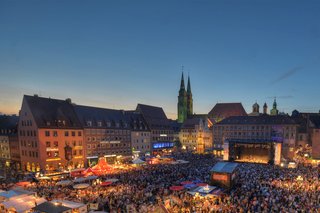
Despite all these advantages, Coulin says, one must never rest on one’s laurels. “You must keep thinking ahead, sometimes take risks, create the new. That makes people curious, and those curious people travel and choose us as a tourist destination.” That is why it is important to continue to support the museums and to equip them so that new exhibition ideas can be realised. In a longer interview in early summer with the daily Nürnberger Nachrichten she argued strongly for further developing Nuremberg’s reputation as a music metropolis, again creating the new alongside the established. “Diversity is crucial to appeal to young and old, families and couples, fans of classical music and lovers of jazz,” she says — different styles packaged in exciting formats. That creates pull and ever‑new visitors. The tourism centre works closely with the city and the cultural scene on this.
And what does the manager like best about her adopted home privately? “For me personally the cultural offering always comes first: fascinating museums, art exhibitions, concerts, theatre… That is my world. Have you seen the new exhibition at the Neues Museum, ‘Grand Hotel Parr’? You must go — it is unique.”.
The journey of tourism chief Yvonne Coulin
Heidelberg: born 1962
Studied Romance languages, English and art history.
Freudenstadt in the Black Forest: Managing director of the spa company
Dresden: Head of the Tourism GmbH
Nuremberg: Since 2010 Managing Director of the Congress and Tourism Centre
About the author
Peter Budig studied Protestant theology, history and political science. He worked as a freelance journalist, headed up the editorial department of a large advertising paper in Nuremberg for ten years and was the editor of Nuremberg’s Abendzeitung newspaper. He has been freelancing again since 2014 as a journalist, book author and copywriter. Storytelling is absolutely his favourite form.