


Start-ups Part 1: In the beginning was the idea…
About innovation, success and the risk of failure
By Sibylle Dorndorf
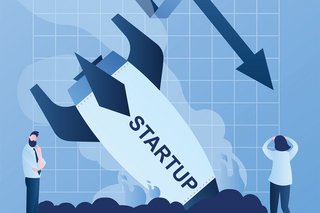
Start-ups are founded with high hopes, but reality shows that around 20% of them fail in their first year. Within the first five years, this figure rises to around 50%; and after 10 years, around 70% of the start-ups have given up, or have been forced to do so.
“The single biggest reason why start-ups succeed is timing. The single biggest reason why they fail is also timing.” This quotation from Bill Gross sums up what often goes wrong. Even the best ideas, the most ground-breaking innovations or visionary services will not be in demand if they’re launched at the wrong time or if the time isn’t yet right for the product in question.
The most common reasons for the failure of start-ups:
The Akademie der Ruhr university supports creative minds that want to turn their ideas into a business model with qualification classes, method workshops and business coaching sessions. To prevent start-ups from going under, the academy has examined the most common reasons for their failure.
A lack of demand on the market (42%)
The main reason why founders fail is the lack of market demand for the product or service in question. A lot of start-ups develop innovative approaches that don’t actually solve real-life problems. The upshot is that they can’t find any paying customers.
A lack of financial resources (29%)
Start-ups that don’t have enough capital to make their vision a reality face liquidity crises. This can lead to them not being able to cover their running costs and, ultimately, to becoming insolvent.
The wrong team (23%)
A committed and diverse team is one of the decisive factors for the success of a young company. Without the relevant abilities and good teamwork, the start-up will find it hard to overcome the challenges that lie along the way.
Strong competition (19%)
A lot of start-ups haven’t researched the market well enough. They underestimate the competitive environment and are forced out of the market by large companies offering similar products with more resources and market power.
No business model (17%)
The lack of a well-defined business model or a business strategy regarding how the company intends to generate profits will ultimately lead to failure.
Errors in timing (13%)
As mentioned before, bad timing can quickly lead to the failure of a start-up. The product was either launched onto the market either too early or too late.
Poor product quality or technical problems (6%)
Even when a product satisfies the needs of the market, it could still fail because of poor quality or technical problems. Even if a product is innovative, customers still expect it to be highly reliable and functional.
The upshot? Failure is nothing to be ashamed of
An entrepreneurial journey is full of challenges, and failure is often part of the learning process. The better prepared the founders are, the higher their chances of success. A strong team, a well-defined business model and an in-depth understanding of the market and its needs are decisive when it comes to surviving the highly competitive world of start-ups.
Bits & Pretzels 2025 welcomes 7,500 founders, investors, and industry leaders to Munich for three days of learning, networking, and doing business.
Date: September 29 to October 1, 2025, during Oktoberfest.
The theme of this year's event is “Connecting Europe.” The goal: to build stronger, faster, and more ambitious connections within the European startup ecosystem and beyond.
Europe's startup scene is at a pivotal moment.
In 2024, startups across Europe raised $45 billion, slightly less than the $47 billion raised in 2023. Over 100 late-stage European companies are preparing for IPOs, and financing is gaining momentum.
At the same time, founders and investors must deal with major changes: new regulations, shifting trade landscapes, and the challenge of expanding globally. Connecting Europe is about identifying and seizing shared opportunities.
Start-ups in international comparison

Start-ups are key players when it comes to bringing about progress and change. They generate innovations that can transform entire industries and drive forward the process of digitalisation and technological improvements. Their influence extends far beyond their corporate boundaries. By creating new jobs, start-ups make the economy more dynamic and offer skilled workers and career changers new job opportunities.
Globally, there are more than 150 million start-ups (as of March 2025). Around 50 million new companies are founded every year.
A lot of internationally renowned start-ups are based in Sweden. They include, among others, the telecommunications application Skype, the music streaming service Spotify, the payment service provider Klarna as well as the developers of the online games and gaming apps King and Mojang.
Further start-up ecosystems flourish in major American cities such as Boston, New York, Seattle, Los Angeles, Chicago and Austin. The USA (still) has, by far, the world’s leading start-up ecosystem.
Sustainable success
What is remarkable is that a lot of start-ups are pursuing sustainable business models and so contributing to environmental and social goals. Moreover successful start-ups attract funding from domestic and foreign investors and generate additional tax revenue. All in all, start-ups are not just an economic growth driver, but also a catalyst for positive changes in society.
Start-up articles Overview
Start-ups Part 2: Starting a business in the toy industry
Smartek Toys – From company foundation to universal genius
Start-ups Part 3: Welcome, zebras and unicorns
The creature kingdom and start-up potential at a time of omnicrisis
Start-ups Part 4: The vision of a better world
Agnawool – Social responsibility over profit maximisation
Start-ups Part 5: Even global players start small
The success story of tonies and what founders can learn from it
Start-ups Part 6: Are they top dogs or rebels on the shelves?
Start-ups offer retailers innovative products and fresh ideas
Start-ups Part 7: The pulse of the future
How start-ups are driving change in the toy industry
About the Author
Sibylle Dorndorf has been covering the toy industry for almost 30 years. The journalist last worked as the editor-in-chief at the TOYS family of magazines of the Göller Verlag publishing house from Baden-Baden, Germany. Her passion: Companies that reinvent themselves; brands that credibly position themselves; people who have something to say; and products with a future.