

100 Years of the Taxi-Zentrale: Our Congratulations!
A heartfelt thank you to all taxi drivers
Von Peter Budig
For 100 years, the majority of Nuremberg’s taxi operators have been organized in the Nuremberg Taxi Cooperative. One of their main tasks is the dispatching of taxi rides to the fleet, around the clock.

Board members Roland Kerl and Bilgun Özkan describe the Taxi-Zentrale Nürnberg eG as follows: “Today, over 50 employees work in our organization. They coordinate almost 500 taxis and over 300 companies. Around 3,600 drivers hold a passenger transport license and a driver’s card for participation in the radio dispatch system, 2,500 of whom are active.”
During its annual run, the Spielwarenmesse plays a major role for taxi drivers, and the number of adventurous stories and experiences is large. The mutual congratulations between the taxi cooperative and the trade fair cooperative come from the heart.
Taxi-Zentrale as a Cooperative
The Taxi-Zentrale Nürnberg eG is a quarter of a century older than Spielwarenmesse eG. On 15 December 1925, 39 motor cab owners founded their cooperative. At that time, there were already seven competing associations organizing individual passenger transport. The reason was simple: Economic hardship and problems with the supply of operating materials prompted all motor cab owners to join forces and found the cooperative of Nuremberg taxi operators. Being strong together was especially important for purchasing operating supplies for the car fleet.
After the war: Consumer appetite and taxi demand rise
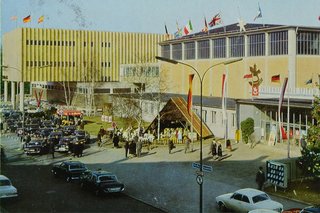
After the Second World War, the heyday of taxi operators began. The industry experienced a rapid upswing in general, and there was no underground yet—the U1 subway line in Nuremberg only opened on 1 March 1972. The growing need for mobility was largely met by taxi companies.
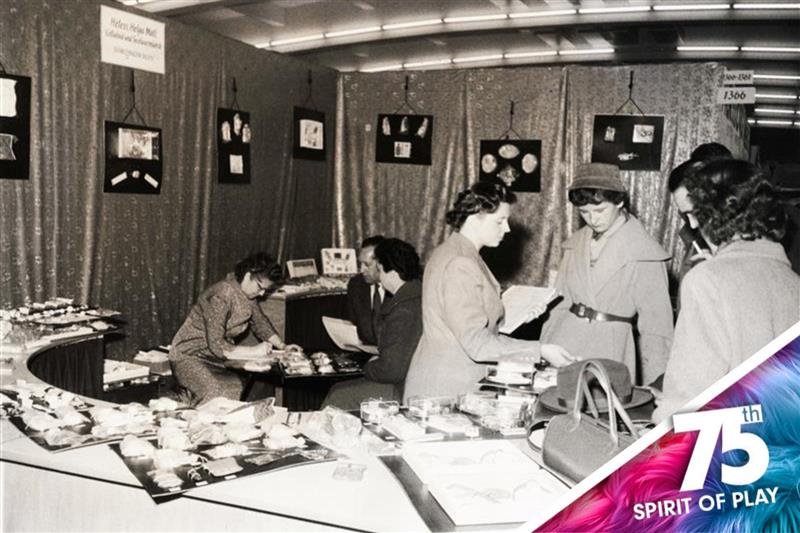
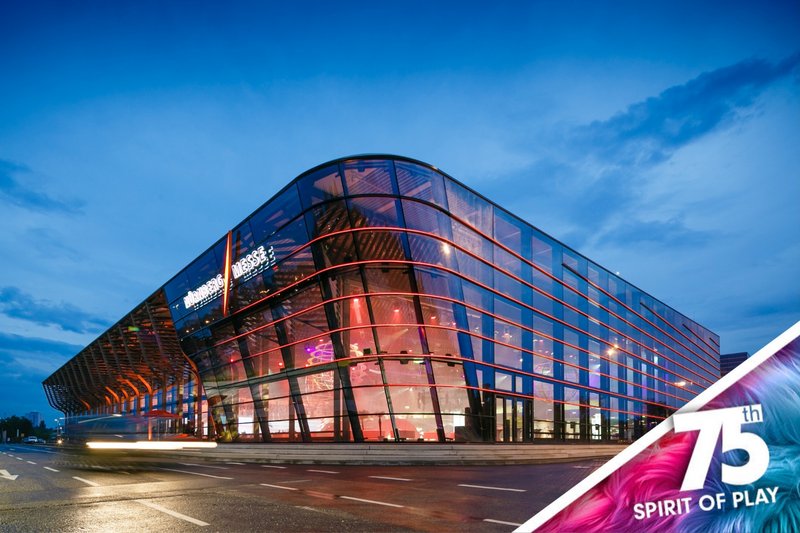
The first Spielwarenmesse, from 12 to 18 March 1950, was opened by Fürth’s Federal Minister of Economics Ludwig Erhard at the old exhibition grounds in the city park. Even then, taxi drivers were ready to transport trade visitors. The fair grew, became more international, and in 1973 moved to the newly built exhibition center in the newly established district of Nuremberg-Langwasser.
Heyday of the fair and golden age for the taxi industry
“In the early 1950s, there were hardly any accommodations, and most trade fair guests stayed in private homes,” says Roland Kerl. Trade fair guests and taxi drivers knew each other, and some drivers made a side business by accommodating trade fair guests themselves. Nuremberg was not just the city of the Spielwarenmesse. The present-day metropolitan region was also home to numerous toy manufacturers. Taxis drove all over Germany to transport and connect trade fair guests and exhibitors. “It was a completely different time. Visitors often stayed for the entire duration of the fair and many even extended their stay by a few days, either privately or to visit companies like Zapf, Märklin, or Lehmann,” recalls Bilgün Özkan, the second co-chairman of the taxi cooperative. “After the fair, it was common for three or four visitors to team up and take a taxi to Frankfurt or Munich airport—this was a typical scenario.”
What is worth knowing about taking a taxi.
Free choice of taxi. All customers are free to choose any taxi at the taxi stand. For example, you do not have to take the first taxi in line at the rank.
Agreeing on a fixed price. If you book a defined route by phone through the taxi cooperative, for example from home to the airport, you can agree on a binding fixed price. No matter how much traffic, congestion, a possible accident or necessary detour occurs on the route.
Courier trips. Taxi drivers don’t just transport passengers. They also deliver items from A to B, do shopping, pick up prescriptions or groceries. They also provide guide services (“I can’t find my way to location XY”).
Ambassadors of the city
In the movies, the taxi driver trade is something for adventurers and quirky characters: Taxi Driver by Martin Scorsese from 1976 became the starting point for actor Robert De Niro’s career. Night on Earth tells five independent taxi stories from five major cities around the world. Five different cars, five drivers, five life stories, compressed into a single taxi ride at night. Directed in 1992 by Jim Jarmusch and four other director friends from the respective countries. Great cinema, but real life is different.
For real taxi drivers, everyday life is less poetic. A lot of time is spent waiting at the taxi stand. But Bilgün Özkan insists there’s more to it than just a trip from A to B: “We are the ambassadors of our hometown. We spark interest, draw attention, take guests to the Kaiserburg, to the Toy Museum, to the Nazi Party Rally Grounds, and we know where to find the best bratwurst.”
“We are the ambassadors of our hometown. We spark interest, draw attention, take guests to the Kaiserburg, to the Toy Museum, to the Nazi Party Rally Grounds, and we know where to find the best bratwurst.”
Bilgün Özkan
Back then: Those who worked hard also wanted to party
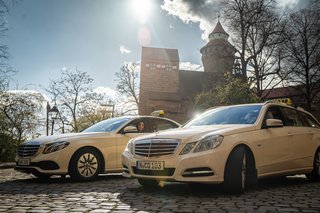
The glamorous parties of major toy manufacturers are still talked about today: “It was probably around 1999 when Lego organized a secret party at the Kaiserburg. Entire taxi fleets brought guests to the site of the nightly festivities,” recalls Bilgün Özkan of a real spectacle. “Extras dressed as mercenaries lined the way up to the castle hall.”
Playmobil in Zirndorf was also among those who regularly hosted events. The parties with buffet and entertainment on the evening before the fair opened at the Brandstätter headquarters were legendary. “These encounters were the talk of the town for days,” remembers Roland Kerl. In the evenings during the fair, customers and exhibitors would go to restaurants in large groups, and afterwards continue on to bars and nightclubs. “Entire taxi convoys would, for example, drive to Bammes in Buch or to the Schwarzen Adler in Kraftshof,” adds board member Bilgün Özkan.
What else is worth knowing about taking a taxi.
Obligation to transport. Taxi drivers are subject to an obligation to transport. No matter who wants to get in, no matter how short the distance, they must be transported. The only exceptions are aggressive or inappropriately behaving passengers, such as those who are very drunk or smell bad.
Traceability. All taxi rides by drivers organized in the cooperative are stored on GPS for three months and can be traced.
Complaint form. Are you dissatisfied with a driver or a ride? Or do you feel you were treated poorly? The taxi cooperative has its own jurisdiction, which resolves disputes, can sanction drivers or deliver a verdict. Anyone can contact the taxi cooperative via the web form. The name of the complainant remains confidential.
Between customers and camaraderie

Business continues as usual: trips to the exhibition center, main station, airport and back. What is easily forgotten: during the trade fair, the daily taxi routine goes on. “Even at the end of January, grandma needs to get to the hairdresser,” laughs Bilgün Özkan. Roland Kerl always fondly remembers the camaraderie among taxi drivers: “We used to have a football team that played against the fire brigade and police teams, and afterwards we’d go for a beer. And if there was ever a conflict, you knew each other and could often resolve things more easily.” Camaraderie still plays an important role in business today.
Fixed prices for selected routes in Nuremberg 2026
Tip: You can book a ride through the Taxi-Zentrale at a fixed price at any time, no matter how much traffic, congestion, or accidents may cause delays.
Nuremberg Messe, NCC West → Main Station 25,50 euros
Nuremberg Messe, NCC West → Hauptmarkt 28,00 euros
Nuremberg Airport → Nuremberg Messe, NCC West 38,00 euros
Main Station → Nuremberg Airport 28,00 euros
Main Station → Kaiserburg 17,00 euros
Taxi phone number: +49 911 19 410
Information from Taxi-Zentrale Nürnberg eG
About the author
Peter Budig studied Protestant theology, history and political science. He worked as a freelance journalist, headed up the editorial department of a large advertising paper in Nuremberg for ten years and was the editor of Nuremberg’s Abendzeitung newspaper. He has been freelancing again since 2014 as a journalist, book author and copywriter. Storytelling is absolutely his favourite form.