


Sustainable materials for toy production
By Daniele Caroli
According to the experts from Sustainable Toys Action Consulting (STAC), the key aspects to take into consideration in order to assess sustainability in toys are the use of environmentally friendly raw materials, the application of resource-efficient and durable design, the achievement of the smallest possible ecological footprint and the capacity to encourage sustainable behaviour.
Several options
As regards materials, which must be natural, bio-based or recycled for a reduced environmental impact, the toy industry has several options at disposal. Depending on the kind of product and the expected performances, companies may employ bio-based or already-recycled plastics, organic cotton, wood (including recycled wood and natural cork), rubber, low-emission MDF (medium-density fibreboard), cardboard. While innovative materials might pop up in the future, scale economy should contribute to decreasing the cost of biobased and recycled plastics which is still higher in comparison with fossil-based plastics. Sharon Keilthy*, founder of Jiminy, Ireland’s eco toystore, and a member of the ToyAward international jury, told the Toy Business Forum audience at the 2026 Spielwarenmesse that “a winning product is the eco version of a toy that children want”. In her opinion, eventually there will no longer be a ToyAward for Sustainability because all toys will be sustainable. Hopefully this will be the final accomplishment. In the meantime, we notice that more and more companies all over the world choose sustainable materials for their toy manufacturing.
Natural wood
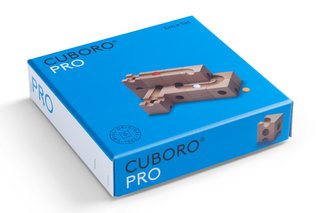
40-year-old Swiss company Cuboro constantly updates its wooden marble run system, at present consisting of over 100 different elements with multiple functions. Both products and hand-made packaging are designed and manufactured in Switzerland. The factory generates energy through solar panels on the roof and is heated using wood scrap.
Family-owned Le Toy Van’s production is carbon balanced since everything is made locally, in the UK. They use no plastic at all – the vehicles have wooden wheels that are inserted manually – and cardboard is employed for packaging. All lines, including their best-selling dolls houses, are made from FSC-certified wood, using non-toxic, child-safe paints.

Start-up company Loggos proposes made-in-Germany construction wood blocks with added rubber to prevent them from sliding. Playing with them requires logic and brings together young and old people. Actually, the original idea comes from the grandfather of one of the three founders. All the wood comes from certified sustainable forests.

Cardboard
Cartonic is a Ukrainian brand of creative 3D cardboard puzzles that allow people to build layered sculptures from pre-cut cardboard pieces – no glue or scissors required. Combining construction play, DIY creativity, and contemporary design, Cartonic offers a hands-on, screen-free experience for kids, teens, and adults. The company’s models are made entirely from natural materials, primarily recycled corrugated cardboard and responsibly sourced wood, with no plastic or harmful coatings.
Rockets, airplanes and paintable masks are the cardboard items offered by Magia y Carton, paying attention to the environmental issues and bringing families together. The cardboard is produced by the forest industry, which is well established in Chile, and is strong enough but also very light. The cardboard packaging is designed to be played with. Every product comes with a diploma so that children feel positively about doing something good for the environment.
Bio-based and recycled plastics

One Love plush toys and bag charms by Yoobie (UK) are made by 100% recycled polyester obtained from water bottles inside and 70% textiles and 30% recycled polyester outside. Soft, with a natural feeling, the plush toys’ body design doesn’t just hug – it snuggles into the child and fits naturally into her/his arms.
Dutch company Waytoplay’s Arches are injection moulded in Bosnia Herzegovina using 100% recycled ABS from the Netherlands. They are tough, safe and built to last for years of open-ended play. With just one shape and an innovative click system, kids can create tunnels, towers, racetracks, abstract creatures… Arches received the 2026 ToyAward in the Sustainability category.
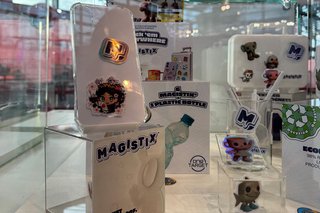
The Magistic stickers by One Target (Switzerland), suitable for customizing any smooth surface, are 98% eco-friendly thanks to the use of recycled TPE (thermoplastic elastomer) and to low-impact production processes. Each Magistic weighs two grams: 1 g comes from sea plastics and 1 g from land garbage. They can be reused just unsticking them and wiping them with a humid cloth. Size options range from collectible mini formats to large wall decorations.
Other materials

Colombian company Sempertex has been manufacturing latex balloons since 1938 (latex is the liquid state of rubber). Concerned about the afterlife of their products, they have been experimenting in order to turn them back into rubber sheets, to be used for shoe soles, for instance. Lately Sempertex has started producing toys for pets under the Dur brand: 50% in virgin rubber and 50% in recycled rubber, they comply with the safety rules for children, smell natural for dogs and are anti-bacterial.
Dutch company BS Toys’ items are mainly in wood but cork, bioplastics, recycled plastics and fabric are employed as well. They say they are proud to be on a journey to be as sustainable as possible, learning on the way through. 20 years ago they started developing outdoor toys and later the range was extended to games and toys to be used indoors.
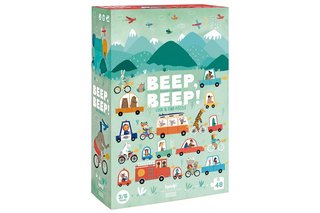
Londji is a project born in Barcelona in 2004 that brings together the worlds of art, games and toys. The wide range of products is manufactured in the company’s factory located at Pla de l’Estany (Girona) respecting working conditions and generating wealth in the local community. They use certified recycled cardboard, paper and wood of European origin while plastic is avoided whenever possible. Games and puzzles of recent introduction contain no plastic at all.
Established in 2011, TicToys has been focusing on products that promote movement, motor skills and coordination. All product lines are manufactured regionally in Leipzig, Germany, and are sustainable, made from wood, cardboard, bioplastics from sugar, and cork leather. The catalogue includes Binabo, an organic construction toy.
The Trefl Group consists of production and commercial enterprises, two sports companies and two media companies. It is one of the largest puzzle manufacturers in Europe and a leading board game producer in Poland. A recent addition to their offer, Brick Trick My City is an eco-friendly construction toy series that allows to build miniature town structures, like a café, a flower shop or a veterinary clinic, using real ceramic bricks, decorative cardboard elements and safe, water-soluble glue.
French company Namaki proposes natural make-up for kids. Only certified ingredients of natural origin are employed for the eco-designed products that are manufactured in Europe and as easy to apply as they are easy to remove, leaving the children free to play.
At the 2026 edition of the Spielwarenmesse, the Sustainable Collection showcased toys standing out for their innovative and sustainable approaches. The experts from Sustainable Toys Action Consulting (STAC) reviewed and assessed all products submitted by exhibitors according to clearly defined criteria.
With the Sustainable Collection, STAC provided a platform for sustainable toys and demonstrated how innovation and responsibility go hand in hand in the toy industry. Activities included product labelling at exhibitor stands, labelling in the New Product Gallery, a presentation on Spielwarenmesse Digital and speeches and panel discussions on the topic of sustainability in the Toy Business Forum.
About the author
Italian journalist Daniele Caroli has been editor-in-chief and contributor to international trade magazines in the nursery products and toy businesses since 1994. He was President of BCMI (Baby Care Magazines International) and of ITMA (International Toy Magazines Association). Previously, he had worked as a journalist in music and consumer electronics periodicals.