

The Forgotten Consumer
Why Toy Industry Must Rethink Age
Commentary by Mital Salia
For decades, the toy industry has helped children and young adults develop their brains. Yet the fastest-growing age group on the planet is one for whom very few toys are intentionally designed. Older adults have become the industry’s Forgotten Consumer! As longevity increases and populations age, perhaps the question is no longer whether adults need play – but whether the industry can afford to ignore them?
The next consumer is already here
We are witnessing perhaps the biggest demographic shift in human history. By 2050, one in six people in the world will be over age 65. The world’s population over 60 years will nearly double. The number of people aged 80 years and above is expected to reach 425 million.
Together, these trends point to one of the toy industry’s largest untapped markets.
A trillion-dollar opportunity
The Silver Economy is now $4.2 Trillion with increasing demand for products and services for older adults (aged 60 and above); clearly the toy industry’s blind spot. The industry has successfully created toys and games for infants, preschoolers, STEM, teens and board games. Kidults also now represent roughly a quarter to one-third of toy sales in several major markets, the biggest shift of the decade.

If the industry has already embraced adults, why not seniors? Very few toys are available for active retirees, empty nesters, older adults living independently, or seniors seeking cognitive fitness.
The toy industry is now evolving into a play industry. Historically, play equaled to entertainment. However today, it equals to Learning, Wellbeing, Therapy, Social Connection, Cognitive Fitness, and Emotional Resilience.
This brings us to our forgotten consumer – the Senior Adults!
Healthy longevity is redefining play
One of the biggest misconceptions is that seniors are frail and disengaged. Today’s seniors are healthier, more active and more connected than previous generations. They are now travelling the world, running businesses, learning technology and playing video games with their grandchildren. The traditional stereotype of ageing no longer reflects reality.
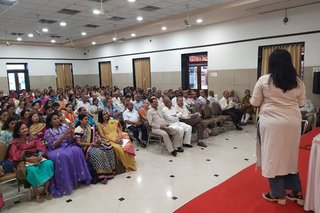
At a recent brain health conference that I attended, geriatric specialist Dr. Anoop Amarnath made a powerful observation: “Living to 100 is now becoming a reality, but longevity is meaningless without cognitive vitality”. What can be better than games to train the brain?
Medicines treat disease or symptom. Devices measure health. Apps monitor habits. Yet few solutions inspire people to consistently adopt brain-healthy behaviours. That is where play becomes powerful.
As the conversation shifts from living longer to living better for longer, older adults are seeking brain vitality and social connection. This creates a compelling opportunity for the toy and game industry.
Can play become preventive healthcare?
As the world grapples with cognitive decline and healthy longevity, games may become one of the most engaging yet underutilized tools for keeping people cognitively stimulated, socially connected and emotionally engaged, along with lifelong learning.
Many cognitive games produce measurable improvements in adults above 60 in areas such as brain processing speed, working memory, executive functions or verbal memory; opening opportunities for this industry to adapt games.
In my work of brain fitness workshops and for cognitive therapy, I have used existing games to enhance brain performance and productivity; and also as a therapy tool for brain patients recovering from stroke, Alzheimer’s etc. The opportunity isn’t to invent an entirely new range of toys. It’s to rethink how existing games are designed and used.
Children play to develop. Older adults play to preserve. Great games can do both.
Mital Salia
Designing for dignity, not dependency
The industry doesn’t need to make a big shift for this new consumer. Just little tweaks in many existing products can help adapt the product to suit the new requirements.
Ensure that the packaging and design of the games accessible to all.
The practical tweaks may include changing the visual experience with font size, contrast sensitivity or colour perception; better handling experience for grip and motor skills; reduction in unnecessary complexity, or even changing the levels of challenge.Focus on functions rather than the gameplay or age group.
I have come across adults who do not buy a game because it has a children’s age group mentioned. The change is the communication on the package makes it immediately open to sale for different ages and also for differently-able people.Design for dignity, not dependency.
Have an inclusive design instead of products that feel clinical. Do not make senior toys just design differently. The older adults do not want products that remind them they’re aging. They want products to help them continue what they have been doing – learning, laughing, connecting, competing and contributing. Design play experiences that help people stay curious, connected, and cognitively engaged throughout a 100-year life.
Designing for older adults isn’t simply a product innovation, it is an opportunity to expand the industry’s customer base and professional ecosystem. As the products evolve from entertainment to healthy longevity, the audience around them will evolve too.
Opening doors to healthcare

For a long time, the toy industry has focused on children, collectors, gaming enthusiasts and hobbyists. Now, let us open up the toy industry's target group to health professionals, including neurologists, psychologists, physiotherapists, mental health professionals, geriatricians and rehabilitation specialists. In the age of longevity, toy and game designers and manufacturers need to adapt by creating and marketing functional toys and games. This shift from entertainment to cognitive health and mental health will bring in a whole new of exhibitors who have adapted their products into new functions of play.
The next chapter of play
The next revolution in play won’t be defined by a new category. It will be defined by a new player. The billion-dollar opportunity is in helping people of every age stay curious, connected and cognitively alive.
About the author
Just like doctors prescribe medicines, Mital Salia prescribes games! A psychologist, India's first Game Therapist, and author of three books, she champions the science of play. She has judged various national game-design competitions, including Government of India's Toycathon, and teaches psychology and neurology of game design to future designers. She is pioneering the use of play for brain performance and healthy ageing.