

Toy & Game Inventors: Appreciating the Value of Product Originators
By Steve Reece
The Toy & Game business has a lesser-known secret that the consumers of our products mostly don’t know. That ‘secret’ is the fact that most of the biggest, most iconic, longest lasting and most commercially successful brands in our industry were not originally conceived by the company that sells them.
There is an army of professional Toy & Game inventors out there who are often not well known (as they would be if they had written a hit book). In fact it is somewhat rare for the inventor behind even the most iconic of Toys & Games to get more than a passing mention – this seems unfair for sure, but it also represents a big trick many companies are missing which is inventing a promotional narrative around the original inventor’s story and persona.
Why don't Toy & Games Companies Develop all their own Concepts internally?
The logical question (usually asked by the Head of the Finance department who typically resents the royalty payments they see going out every quarter to Inventors) is why don’t companies create these big inventions themselves AND why do they even need Inventors? There are a few different elements to answer that question.
Firstly, companies tend to self-limit and self-direct their creative output based on what the company is known for and what sells well for them. External people without parameters and corporate restrictions don’t have these self-limiting restraints, they are normally creating something which they think will resonate with the end consumer and then trying to find a company that agrees with their vision. It is much easier for an external idea to lead to the launch of a big new initiative than it is for an internally developed idea or concept.
Secondly, most Toy & Game companies keep their staffing levels fairly lean. Product development teams are normally fully loaded with the logistics of developing new products to the degree that they are much less likely to have time and head space to constantly creative brainstorm. Overloaded internal staff also tend to have less headspace and focused time to conduct the first half of ‘R&D’ – that being Research. There is always another art deadline, always another factory production start date to hit and always another meeting to go to. Much as the Finance department may resent paying Inventor royalties, paying royalties normally means that something is selling, so you pay as you sell versus internal staff overhead which you pay whether you sell anything or not!
How the Business of Inventing Works
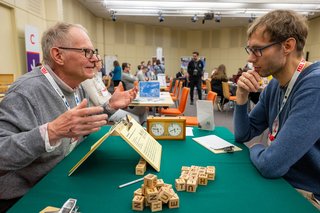
The typical business model for Inventors in the Toy & Game business is not quite what you think it might be. There are a limited number of people who can earn enough money to live off products they have already licensed, and fewer still who can live from just one classic product they licensed years ago which keeps on selling in big quantities year after year. Think of those people as representing the very top of the pyramid. The rest of the pyramid is largely populated by those who spend most of their working time doing ‘work for hire’ design work where they are paid on a freelance basis to produce or ‘flesh out’ concepts for Toy & Game companies. Then they may have in effect a side hustle of Inventing which fits well alongside the ‘Work for hire’ projects. By pitching cool, innovative concepts as an Inventor you can pick up work for hire projects, and by supplying high quality work for hire concepts you get closer to the company and can find a more receptive home for your own inventions.
The challenge for many Inventors is that the fun part is creating a new concept you like. It is often less fun for creative minds to trek from pitch meeting to pitch meeting hearing ‘No thanks’ constantly in the hunt for that very occasional ‘Yes we’d like to license that’. Most Inventors get frustrated because products that they perceive will obviously appeal to end consumers often don’t get the chance to come to life.
So in conclusion, the Toy & Game industry should be very grateful for those hardy creative warriors who invest their time, money, skills and energy into developing products which might never see the light of day in the chase for the next big thing. These people are deeply critical for our industry and should be cherished and encouraged greatly.
Precisely because game designers play such a central role in the industry, the Spielwarenmesse has created its own platform – the International Game Inventors Convention (GIC) – specifically designed to bring game designers and games editors together. The GIC takes place annually on the Friday of the Spielwarenmesse in Nuremberg and offers game publishers the ideal opportunity to scout for new products and get to know promising prototypes directly from the creative minds behind them. This is how the connections are forged that take innovative game ideas from prototype to the shop shelf. The event is a collaboration between the Spielwarenmesse Group and the Bayerisches Spielearchiv Haar e. V.
The next International Game Inventors Fair will take place on Friday, 5 February 2027. Secure your place as a game designer or editor and discover the game ideas of tomorrow.
About the author
Steve Reece has been working in the toy industry for 25 years. He previously managed classic brands such as Monopoly, Play-Doh and Trivial Pursuit at Hasbro. He now runs his own agency, Kids Brand Insight, advising companies on how to increase their overseas sales, build robust and diversified supply chains, and recruit the right staff.