

Ways to the Buyer
ToyHistory: Toy Retail in Germany until 1945
Editor's Foreword
To mark the 75th anniversary of the Spielwarenmesse, we are expanding the Spirit of Play online magazine to include the “ToyHistory” section. To kick things off, we look back at the historical circumstances that made Nuremberg the home of the world’s leading toy trade fair. The research was conducted by Dr. Helmut Schwarz, an economic historian and former director of the Nuremberg Toy Museum.
By Dr. Helmut Schwarz (1952–2022)
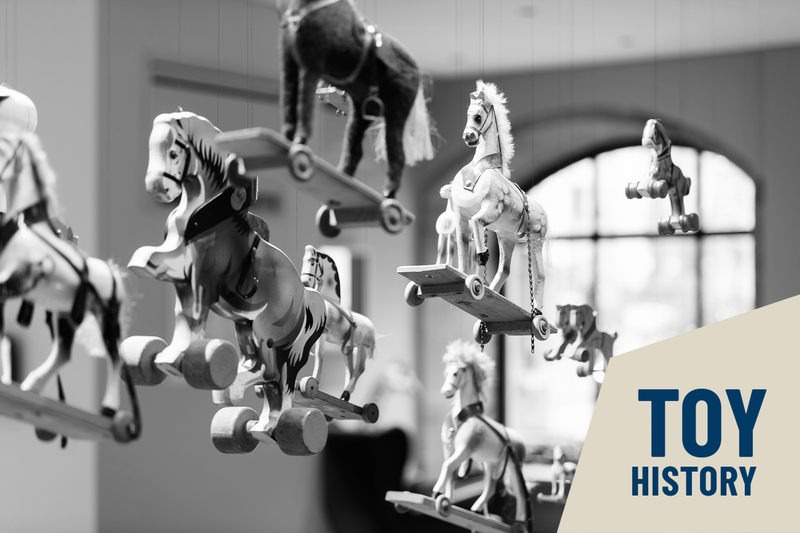
The origins of the toy trade are closely linked to the beginnings of commercial toy production, which is first documented in Germany around 1400 in Nuremberg. Nuremberg merchants engaged in long-distance trade likely included toys in their wide-ranging product assortment as early as the 15th century. In the years that followed, they distributed products from the local “craft industry” as well as from toy makers in the region. Along their heavily traveled trade routes, Nuremberg merchants stimulated the production of wooden toys in the Alps (Berchtesgaden, Oberammergau, Val Gardena), as well as in Thuringia and the Ore Mountains. In doing so, they played a key role in the emergence of a cottage industry for toys in these regions; however, over the course of the 18th century, they had to cede their dominant position to local publishers and merchants.
Nuremberg toys, as well as many carved and turned wood products from other toy-producing regions, were marketed under the collective term “Nuremberg goods.” They were sold at annual fairs, Christmas markets, and national trade fairs, the most important of which were the Leipzig Spring and Fall Fairs. Peddlers handled distribution in rural areas. In the 18th century, “Nuremberg stores” became established in larger cities, where toys, among other items, were sold. Innovative merchants such as P. F. Catel in Berlin and G. H. Bestelmeier in Nuremberg began mail-order business as early as 1790, using illustrated catalogs.
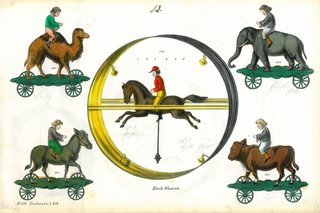
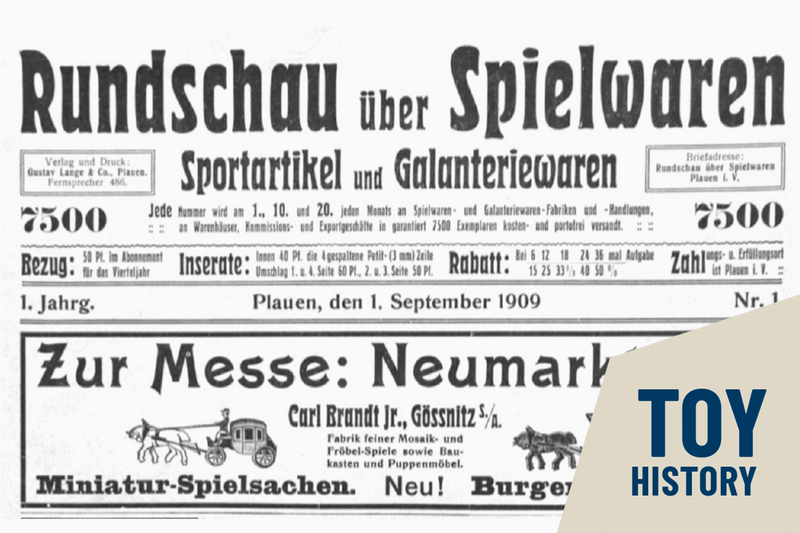
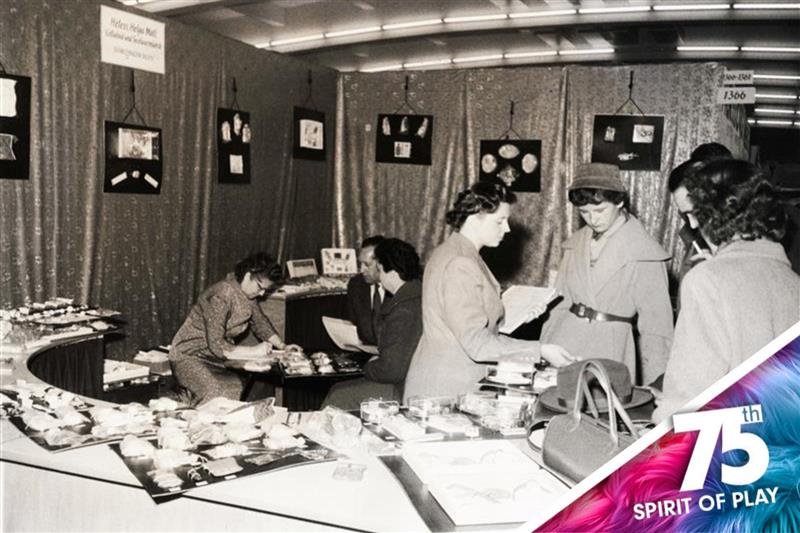
The Industrial Age, with its new transportation and communication networks, rapidly expanding goods production, and steadily rising demand, opened up bright prospects for the toy trade beginning in the mid-19th century. Commodity fairs were replaced by trade shows. The Leipzig Fair developed into the central trading hub of the international toy industry. Parallel to the rise of German toy production to global prominence, numerous wholesale and export firms were founded. They sent their own sales representatives on business trips and, in many cases, established sample warehouses and branches both domestically and abroad. General stores with a limited selection of toys opened everywhere, as did numerous specialty stores that carried only toys. Department stores in major cities, department store chains, and fixed-price stores emerged, quickly becoming among the most important buyers of toys.
To secure better terms, many of the major brand-name companies—such as Steiff, Märklin, Richter, and Bing—sought to bypass middlemen. They established their own sales departments and created a network of sample warehouses and branch offices both domestically and abroad. Driven by similar motives, foreign importers—as well as German specialty trade associations—established their own purchasing centers in the hubs of Germany’s toy-producing regions. The Great Depression, the persecution of Jewish toy manufacturers, and the centralized, coercive organization under the Nazi regime severely shook the entire industry. During World War II, toy production and trade came to a near-complete standstill. After the total collapse, a fresh start seemed almost unimaginable in 1945.
[The author, Dr. Helmut Schwarz, completed the manuscript in December 2017.]
Literaturhinweise
Georg Wenzel: Die Geschichte der Nürnberger Spielzeugindustrie. Nürnberg 1967
Werner Sombart: Der moderne Kapitalismus. Band II: Das europäische Wirtschaftsleben im Zeitalter des Frühkapitalismus. Erster Halbband. München 1987 (= unveränderter Nachdruck der 2. Auflage, München/Leipzig 1916), hier v. a. das Kapitel „Der Güterumsatz“, S. 429 ff.
Thomas Stauss: Frühe Spielwelten. Zur Belehrung und Unterhaltung. Die Spielwarenkataloge von Peter Friedrich Catel und Georg Hieronimus Bestelmeier. Hochwald 2015
Manfred Bachmann: Die Funktion der Spielzeugmusterbücher im Handel. In: ders. (Hrsg.): Das Waldkirchner Spielzeugmusterbuch um 1850. Reprint. Leipzig 1977, S. 14‐18.
Manfred Bachmann (Hrsg.): Der Universal‐Spielwaren‐Katalog mit Neuheiten‐Nachtrag 1926. Leipzig 1985
Otto Senst: Die Metallspielwarenindustrie und der Spielwarenhandel von Nürnberg und Fürth. Erlangen 1901
Katrin Sohl: Messe und Spielwarenhandel. In: Hartmut Zwahr/ Thomas Topfstedt/ Günter Bentele (Hrsg.): Leipzigs Messen 1497‐1914. Teilband 1: 1497‐1914. Köln u. a. 1999, S. 421 ff.
Kurt Lebermann: Die Konzentration der Bingwerke Nürnberg. Diss. Würzburg 1924
Ausschuß zur Untersuchung der Erzeugungs‐ und Absatzbedingungen der deutschen Wirtschaft (Hrsg.): Die Deutsche Spielwarenindustrie. Verhandlungen und Berichte des Unterausschusses für allgemeine Wirtschaftsstruktur (I. Unterausschuß). 5. Arbeitsgruppe (Außenhandel). 19. Band. Berlin 1930
Heike Hoffmann: Erziehung zur Moderne. Ein Branchenportrait der deutschen Spielwarenindustrie in der entstehenden Massenkonsumgesellschaft. Diss. Tübingen 1998
Zitiervorschlag
Schwarz, Helmut: Ways to the Buyer, Manuscript completed by the author in November 2017; Published posthumously online on August 03, 2026, in: Spirit of Play Online Magazine. Spielwarenmesse Group, Nuremberg. Online: www.spielwarenmesse.de/en/mag/toyhistory/helmutschwarz-toy-trade (Access: DD. MM. YYYY).
About the Author
Dr. Helmut Schwarz (September 5, 1952 – February 20, 2022) was an economic historian and served as director of the Nuremberg Toy Museum from 1994 to 2014. Together with his team, he modernized the museum, expanded the children’s play area, and created the museum playground with a café and the virtual storage facility. He also personally championed the effort to bring the German Toy Archive from Marburg to a new home in Nuremberg. He authored numerous works on the history of the toy industry.
Toy History – The Beginnings of the Spielwarenmesse
Starting in 2016, Dr. Helmut Schwarz conducted research on the company’s history on behalf of Spielwarenmesse eG. In particular, he identified the conditions and factors that led to the founding of the trade fair in Nuremberg. The trade fair team will publish the manuscripts he completed in 2026 in the online magazine *Spirit of Play* to mark the 75th anniversary of the Spielwarenmesse, thereby honoring a significant custodian of knowledge regarding German toy and economic history.
Overview of the series
The series will consist of nine web texts accompanied by seven research articles exploring the origins of the Toy Fair.
ToyHistory 01: The Nuremberg Toy Region | 24 June 2026
- Short web version: The Nuremberg Toy Region (November 2017)
- Short web version: Fürth and Zirndorf as toy-making centres (December 2017)
- PDF research paper: Nuremberg, the Toy City (January 2017) - Available in German only.
Toy History 02: Toy-making regions in Germany | 13 July 2026
Thuringia – Saxon Ore Mountains
- Web summary: Toy Region Thuringia (November 2017)
- Web summary: Toys from the Saxon Ore Mountains (see below) (November 2017)
Toy History 03: Toy-making cities in Germany | 27 July 2026
Württemberg – Berlin and Brandenburg at the Havel
- Web summary: Toy Region Württemberg (November 2017)
- Web summary: Toys from Berlin and Brandenburg an der Havel (December 2017)
Toy History 04: Wege zum Käufer | 3 August 2026
Toy trade in Germany until 1945
- Web summary: Toy trade in Germany until 1945 (November 2017)
- PDF research paper: Ways to the Buyer (January 2018) — Available in German only.
Preview 24 August 2026: Toy History 05: The Trade Press
Trade Journals and Newspapers of the Toy Industry (1886–1960)
Delve even deeper into the history of the toy industry: Spanning 1,400 square meters, the world-famous Toy Museum showcases the world in miniature with a wealth of extraordinary exhibits ranging from antiquity to the present day. In addition to an imaginatively designed children’s area in the attic, visitors can also enjoy a large outdoor playground and the museum café in the courtyard.
Location: Nuremberg Toy Museum, Karlstrasse 13-15, 90403 Nuremberg
Exhibition: Games History(ies) February 20 through September 13, 2026
Visit the website Spielzeugmuseum Nürnberg