

ToyTrend 2027: License to Play
How Fandom Became the Toy Industry’s Growth Engine
By Steven Ekstract
For decades, the toy industry treated licensing as a dependable but fairly linear business. A film or television series created awareness, a toy company secured the rights and retailers built a program around a release date. That model remains powerful, but it is no longer the whole story. What I call "License to Play" is a much broader, faster and more international marketplace - one in which intellectual property can emerge from almost anywhere, travel across every screen and reach the toy aisle in months rather than years.
Having spent nearly three decades covering the licensing business, I have never seen IP play a more important role in driving growth for the toy industry. Circana reports that the global toy market reached $123 billion in 2025, up 8%. Licensed toy sales grew 15% and represented 37% of the market, while collectibles increased 32% and approached one-fifth of global toy spending. These are not marginal gains. They are clear evidence that consumers are increasingly buying toys because of the characters, stories, worlds and fan communities behind them.
Two roads to the toy shelf
License to Play is developing along two distinct tracks. The first begins in the traditional entertainment economy: films, television, comics, books, anime and games. Pokémon may be the clearest example of a truly living IP universe. Children and adults encounter it through trading cards, video games, animation, plush, mobile experiences and social media - often all at the same time. Star Wars can generate fresh products with every streaming series. Minecraft, Bluey, Harry Potter and One Piece continually create new entry points for fans without depending on a single theatrical release.
The second track begins in the virtual world. A meme, creator video, GIF, game experience or even a zoo clip can build a massive audience before anyone has written a traditional franchise plan. Skibidi Toilet grew out of YouTube culture and became a global licensing program. Moo Deng, the baby pygmy hippo, showed just how quickly an animal can become an international character phenomenon. K-pop, kawaii characters and online creator communities routinely cross borders before conventional market research even catches up.
The big difference is speed. Traditional entertainment licensing is planned around production and release calendars. Internet-born IP is tested publicly, instantly and continuously. The audience tells us what it loves through views, shares, remixes, comments and, ultimately, purchases. For manufacturers, that creates tremendous opportunity - but also real risk. Billions of views do not automatically add up to a durable property. The real questions are whether the phenomenon has a distinctive identity, clear rights, repeatable characters, an engaged community and enough narrative runway to survive beyond its original viral moment.
Why nostalgia and kidults matter
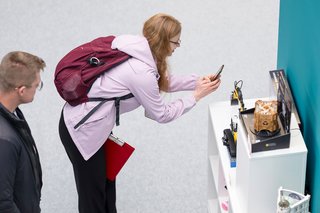
The rise of the kidult consumer is what connects these two tracks. According to Circana, buyers aged 15 and older now account for nearly 20% of global toy sales, and their spending has more than doubled since 2020. In developed markets, teens and adults are generating much of the industry's incremental growth through collectibles, hobby products and nostalgia-driven purchases.
Nostalgia is sometimes dismissed as simply recycling the past. That seriously underestimates its commercial power. For adults, a toy can be a memory, a design object, a badge of identity and a visible expression of fandom. Pokémon, Star Wars, Barbie, Hot Wheels and classic anime properties can speak to several generations at once. A parent may introduce a child to a beloved character while purchasing a premium collectible for themselves. The same license can therefore support entry-price toys, mass-market products and high-end editions - but it cannot speak to every consumer in exactly the same way.
This is also why Asian IP has become such a powerful global force. Anime, manga, K-pop and kawaii properties are not confined to one medium, one market or one age group. Fans express their affiliation through apparel, accessories, collectibles, cards, plush and experiences. Retailers that continue to categorize these properties simply as "children's entertainment" will miss a very large part of their value.
What the industry should do now
- Build a two-speed development model. Established franchises can support long-range planning, broad assortments and coordinated retail programs. Viral properties demand smaller initial runs, modular design, rapid approvals and the ability to replenish quickly when the consumer response is there.
- Measure fandom - not simply awareness. Views matter, but repeat engagement, fan creation, community activity and purchase behavior are far better indicators of whether an online sensation can become sustainable IP.
- Segment consumers by fan motivation, not age alone. Children may want play value; adult collectors may want authenticity, display quality, scarcity or nostalgia. The strongest programs understand both audiences without pretending that one product will satisfy everyone.
- Retailers must behave less like warehouses and more like fandom destinations. Curated assortments, launch moments, exclusives, displays, trading events and social content can transform a product release into a community occasion. In a marketplace where entertainment competes for every minute of attention, the store itself has to become part of the story.
A living world, not a logo
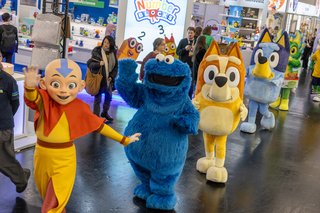
License to Play geht nicht einfach darum, ein bekanntes Gesicht auf ein Produkt zu kleben. Es geht darum zu erkennen, dass die wertvollsten Lizenzen jetzt als lebendige Welten funktionieren. Einige werden über Jahrzehnte durch Film, Fernsehen, Verlagswesen und Spiele aufgebaut. Andere entstehen fast über Nacht durch soziale Medien und Online-Communities. Beide sind erfolgreich, wenn sie dir und anderen Verbrauchern einen Grund geben, teilzunehmen und, genauso wichtig, einen Grund, zurückzukommen.
Für Spielzeughersteller und Einzelhandelsketten ist die Chance riesig, aber das Zeitfenster bewegt sich schneller als je zuvor. Die Gewinner 2027 werden diejenigen sein, die die Beständigkeit großartigen geistigen Eigentums mit der Geschwindigkeit der digitalen Kultur verbinden. Am wichtigsten ist, dass sie verstehen, dass Spielen nicht mehr einer Altersgruppe, einer Plattform oder einem Land gehört. Das ist die neue License to Play.
What's shaping the toy industry next year? Discover the ToyTrends that will drive your revenue. Find the perfect products for your business from 2–6 February, 2027, at Spielwarenmesse, Central Entrance, Nuremberg Exhibition Centre.
About the author
When it comes to brand licensing, Steven Ekstract is an internationally recognised voice. As founder of Global Licensing Advisors, he advises brands looking to grow through licensing and strategic collaborations – and since 2022 through his X Tracks Licensing Summits.
Previously, he was the founding publisher of License Global, the industry's leading trade magazine, and as Brand Director he shaped the flagship licensing expos across the USA, Europe, Japan and China. His book Brand Licensing For Dummies is regarded as a practical go-to introduction. In December 2025, he was inducted into the Licensing Hall of Fame – alongside legends such as Walt Disney and George Lucas.
On the Spielwarenmesse TrendCommittee, Steven Ekstract brings the global licensing perspective: a sharp eye for how emotional connection and virality turn into genuine trends – and how brands become firm favourites.