

ToyTrend 2027: Beyond Limits
The healing power of play
By Daniele Caroli
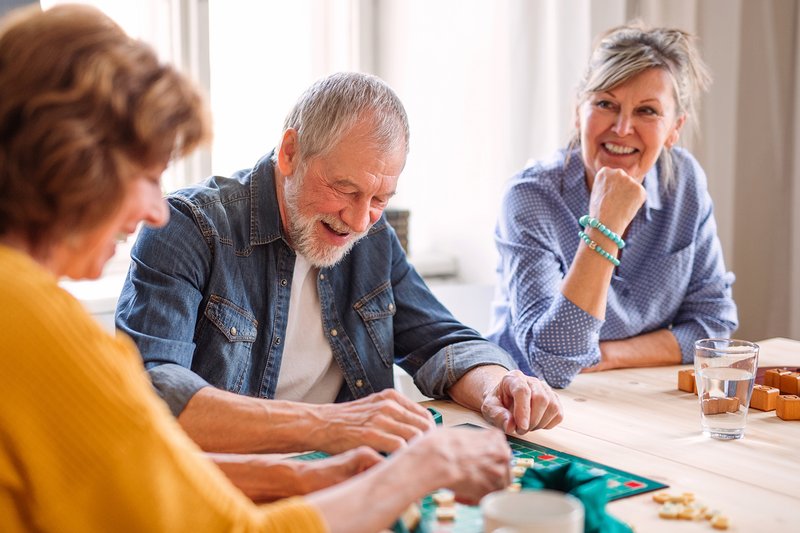
There is more in play than mere entertainment. While toys were traditionally seen as simple pastimes, they have been appreciated more broadly for their educational value since the second half of the last century. Games have been increasingly seen as a great way to boost human connection and to express one’s emotions. Play can heal, support and empower people, especially people with special needs of all age groups. This applies equally to physical or mental disabilities, mobility impairments, accidents and illnesses, as well as to provide support for emotional distress or even giftedness.
Mental and social benefits of play
Obviously, play cannot substitute medical therapy and professional assistance. However, it may be of great help when it is necessary, for instance, to activate motor skills, sharpen concentration and memory, stimulate the sense or create emotional connections. This is what the Beyond Limits trend is about: creating moments of inclusion, promoting independence, developing the individuals’ abilities – regardless of age, condition or diagnosis.
In Summer 2024 research from the University of Plymouth in the UK showed that adults and adolescents with autism playing with board games reported feelings of community, independence and new skills, as well as finding an alternative method for forging social relationships. Memory and card games train different cognitive areas and promote attention, memory and motor skills. They have started using larger cards and symbols, magnetic elements, non-glare surfaces, in order to facilitate not only little kids but the elderly and people with autism as well.
A concrete opportunity for industry and trade
Some toy manufacturers have already expanded their product ranges. In doing so, they are helping people with autism, patients recovering from illness, following an accident or an operation, or undergoing rehabilitation, as well as older people facing the challenges of ageing
In her article 'The Forgotten Consumer', Mittal Salia, India's first game therapist, asks that such products must be accessible to all, focused on functions, and designed for inclusion. Eventually, though, function and fun must go hand in hand, because toys and games must be playful and stimulating above all else. Retailers wishing to broaden their assortment might seize a concrete opportunity: a mother who buys a game for her child in a toy store can also pick up a suitable game for her own mother with dementia. It is worth noting that by 2050 the world’s population over 60 years will nearly double (United Nations’ estimate) and the number of people aged 80 years and above is expected to reach 425 million.
Toys as tools to heal mind and body
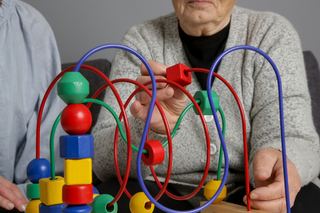
The elderly may need toys to stimulate mental and physical skills or to fight against diseases such as Alzheimer’s and dementia. Many consumers agree that mental stimulation is one of the most positive impacts of play for older adults in their lives. Seniors with Alzheimer’s or dementia can become anxious or nervous when they don’t have something to do with their hands. A fidget blanket or a fidget board provides a variety of fun activities and will keep restless hands occupied. However, a tool like that may help with several conditions, for both kids and adults. Moreover it offers sensory activities for people suffering from memory loss, dementia, autism, Asperger’s, Alzheimer’s, ADHD, anxiety. In general, sensory toys are designed to keep the hands busy and the mind focused, providing an engaging, calming tactile experience for adults with dementia, Alzheimer’s disease or a visual impairment. Fidget blocks or cubes are perfect as desk toys, for stress relief, focus or just fun at anybody’s fingertips. Soft toys like plush may reduce loneliness and foster emotional closeness.
Play therapy
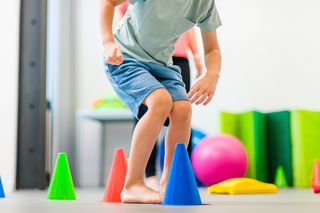
There are therapeutic functions of play that are recognized by the specialist literature. Play provides a safe environment to express feelings, practice empathy and handle frustration. Playing with tactile objects, sand or water, individuals are supported in adapting to overwhelming textures, sounds or motions. Fine motor coordination can be enhanced using puzzles or play dough. In the frame of predictable social scripts and structures, peer interaction and communication result less intimidating. Play promotes self-esteem when mastering a game or building blocks fosters a strong sense of personal accomplishment. All this applies to both children and adults with special needs or conditions.
What's shaping the toy industry next year? Discover the ToyTrends that will drive your revenue. Find the perfect products for your business from 2–6 February, 2027, at Spielwarenmesse, Central Entrance, Nuremberg Exhibition Centre.
About the author
Daniele Caroli worked as a journalist in the Italian music business until 1985, later in consumer electronics and then as editor-in-chief of the nursery products trade magazine Il Giornale dell’Infanzia (1994–2018) and of the toy trade magazine Giochi & Giocattoli (2000–2013). He acted as President of the Baby Care Magazines International association BCMI (2004–2007 and 2022–2023) and of the International Toy Magazines Association ITMA (2008–2012). Since 2013 he has been a member of the Spielwarenmesse TrendCommittee and since 2020 he has been contributing to Spirit of Play, the online magazine of Spielwarenmesse.