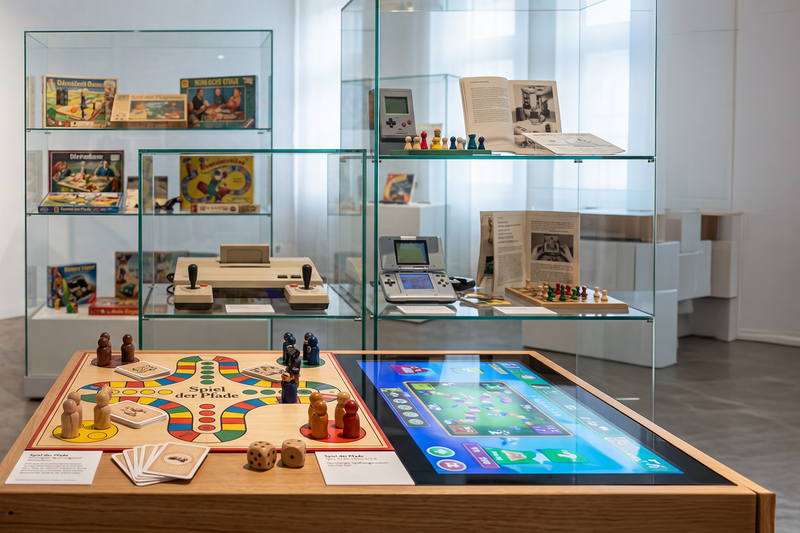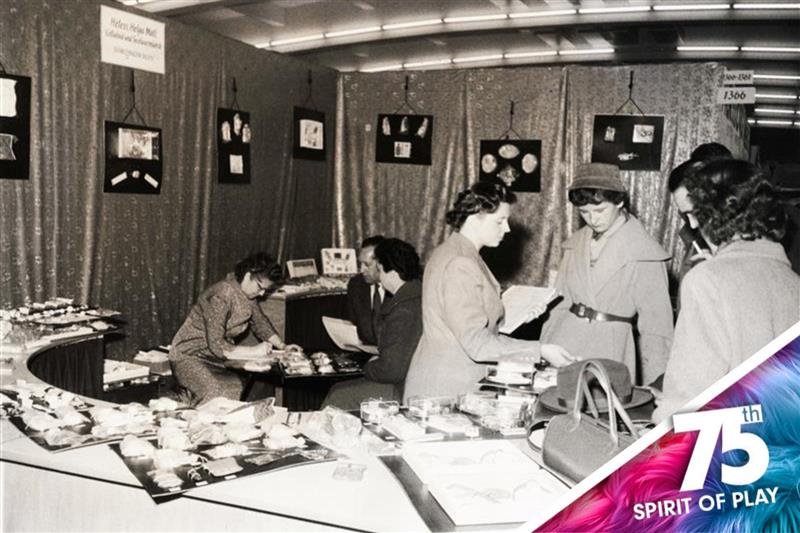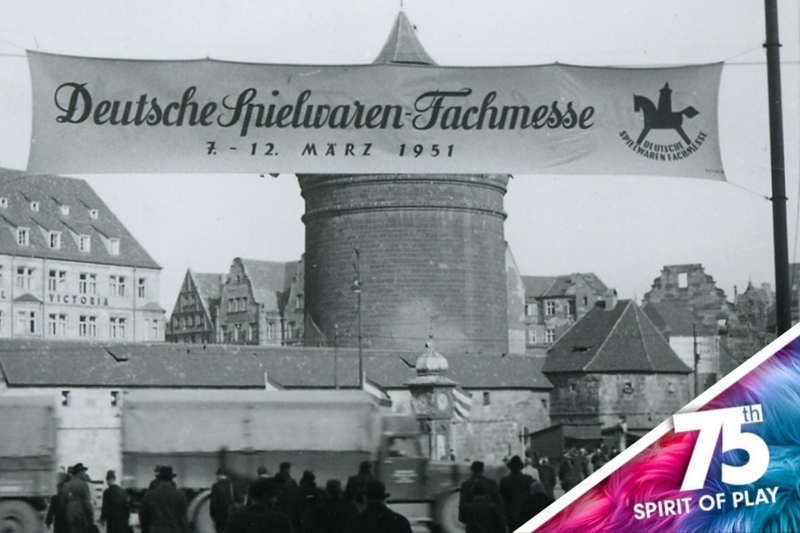


Nuremberg Toy Region
ToyHistory: The economic history of the German toy industry
Editor's note
To mark the 75th edition of Spielwarenmesse in 2026, we are expanding the Spirit of Play online magazine to include a new section called 'Toy History'. To kick things off, we take a look at the historical circumstances that established Nuremberg as the home of the world’s leading toy trade fair. The two web summaries, 'Nuremberg toy region' and 'Toy industry locations: Fürth and Zirndorf', and the research paper ‘Toy city Nuremberg’ (see PDF Download below) were researched by Dr Helmut Schwarz, an economic historian and former director of the Nuremberg Toy Museum.
By Dr. Helmut Schwarz (1952–2022)
Toy manufacturing and trade in Nuremberg can look back on a tradition of over 600 years. The city’s tax lists already mention two “Tockenmacher” in 1400, who made small clay figures and turned dolls. Other figurative toys made of alabaster, wax and papier-mâché followed over time. In the 17th and 18th centuries Nuremberg craftsmen were already producing elaborate dollhouses, mechanical metal toys and other technical playthings.
The trade fair sector relied on limited liability companies (GmbHs & AGs)
Nuremberg Merchants sold these products domestically and abroad. Thanks to their extensive trade networks the city also developed into a distribution hub for wooden toys from other toy regions. Together with local products these formed a fixed component of the so‑called “Nuremberg tat” (Nürnberger Tands). A good overview of the pre-industrial toy assortment is provided by the catalogs of the Nuremberg mail-order pioneer Bestelmeier, through which, from 1793, toys could even be ordered by post.
The toy industry opted for a co-operative
During industrialisation the Nuremberg toy trade grew enormously: in 1914 there were 243 toy businesses in the city. Numerous tinplate toy factories such as Hess, Issmayer, Carette, Plank, Günthermann and especially the Gebrüder Bing made Nuremberg the centre of the metal toy industry. Their trains, steam engines, ships, airplanes, cars and mechanical figures were expressions of a technology-driven civilisation.
The cooperative ideal is part of UNESCO’s Intangible Cultural Heritage
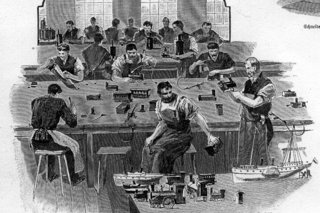
In addition, Nuremberg was home to renowned manufacturers of tin figures (Heinrichsen, Haffner), wooden toys (Baudenbacher, Hacker) and games (Spear, Abel‑Klinger). In the wake of Nuremberg’s expansion a differentiated tinplate toy industry also developed in the neighbouring towns. In numerous workshops, rattles, children’s trumpets, spinning tops and money boxes as well as mechanical animal figures and vehicles were produced. Well-known manufacturers included GAMA and Götz & Sohn in Fürth as well as the Zirndorf firms Bolz, Rohrseitz, Seidel and Brandstätter. Over 100 Nuremberg–Fürth trading houses such as Bechmann & Ullmann, Bauer, Kohnstam, Dressel and Eisenmann ensured worldwide export. Despite the two world wars, despite currency devaluation, the Great Depression and the persecution of Jewish toy entrepreneurs in the Nazi era, the Nuremberg–Fürth toy industry was able to hold its own on the global market until well into the 1960s. Schuco became the largest toy factory in Europe. Trix, Bub, Arnold, Fleischmann and Lehmann made Nuremberg a model railway city. Structural change and globalization, however, have left deep marks in the last four decades: tinplate toy production has almost completely ceased.
Citation suggestion
Schwarz, Helmut: Nuremberg Toy Region, Manuskript vom Autor abgeschlossen im November 2017;published online posthumously on June 24, 2026 in: Spirit of Play online magazine. Spielwarenmesse Group, Nuremberg. Online: https://www.spielwarenmesse.de/de/magazin/toyhistory/helmutschwarz-toy-region-nuernberg (accessed: DD Month YYYY).
About the author
Dr. Helmut Schwarz (5 September 1952 – 20 February 2022) was an economic historian and headed the Toy Museum Nuremberg from 1994 to 2014. Together with his team he modernised the museum, expanded the children’s play area, created the museum playground with café and the virtual depot. He also personally campaigned for the German Games Archive from Marburg to find a new home in Nuremberg. Numerous publications on the history of the toy industry came from his pen.
ToyHistory – The beginnings of the Spielwarenmesse
From 2016 Dr. Helmut Schwarz conducted research on corporate history on behalf of Spielwarenmesse eG. In particular, he worked out the prerequisites and factors that led to the founding of the specialist trade fair in Nuremberg. The manuscripts he completed are being published by the trade fair team in 2026 in the online magazine Spirit of Play in grateful remembrance of the much-valued and humorous researcher and preserver of knowledge.
Overview of the series
The series will consist of nine web summaries and seven research papers examining the origins of the Toy Fair.
ToyHistory 01: Nuremberg Toy Region | 24 June 2026 (see above)
- Web summary: Toy Region Nuremberg (November 2017)
- Web summary: Toy Industry Location Fürth and Zirndorf (December 2017)
- PDF Research paper: Toy City Nuremberg (January 2017) - Available in German only.
ToyHistory 02: Toy-making regions in Germany | 13 July 2026
- Web Summary: Toy-making region Thuringia (November 2017)
- Web Summary: Toys from the Saxonian Ore Mountains (November 2017)
Announcement for 27 July 2026: ToyHistory 03: Toy-making cities in Germany
Württemberg – Berlin and Brandenburg an der Havel
Delve even deeper into the history of the toy industry: the world-famous Spielzeugmuseum displays the world in miniature across 1,400 square metres, with a wealth of extraordinary exhibits from antiquity to the present. Alongside an imaginatively designed children's area on the top floor, the museum also offers a large outdoor playground and a museum café in the courtyard.
Location: Spielzeugmuseum Nürnberg, Karlstrasse 13–15, 90403 Nuremberg
Exhibition: Games-Geschichte(n), 20 February - 13 September 2026
Visit the Spielzeugmuseum Nürnberg website for more information.